
Embodying Intimacy
How Chala Hunter approached the storytelling of intimacy on Heated Rivalry
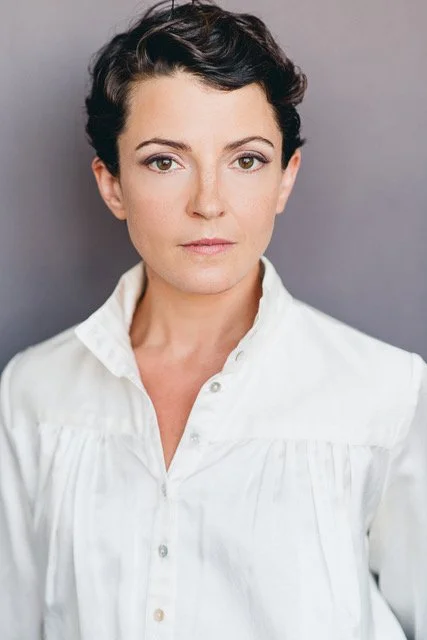
I had the incredible opportunity to chat with Chala Hunter, the intimacy coordinator from Heated Rivalry, to discuss storytelling and sex and what showing that means for people’s everyday lives.
I wrote an essay on what an honour it is to be invited into sexual intimacy in fiction and why it’s important to show it. But the conversation Chala and I had spanned so much more than the essay, and I wanted to share it.
My hope is that when you’re writing your own intimacy, you can take some inspiration from someone whose whole job it is to ensure that story and character shine through intimate moments.
The interview has been edited lightly for clarity and length.
My interview with Chala:
Sarah: I've been interested, for years, in the intersection of sex and storytelling. From what I've heard, you’re a crucial part to making sure that the emotional beats in the storytelling are being portrayed properly in those scenes, right?
Chala: It's a huge priority for me.
What are you looking for in an intimate scene when it comes to the storytelling?
I'm looking for accuracy, and by that, I mean I'm looking to see if the physical actions that are being performed and the quality of those physical actions feel appropriate a) to the characters and b) to the moment in the narrative arc.
That could mean, for example, has this character had this type of experience before or is this their first kiss or have they been dating for fourteen years?
Does their body language seem to tell us that they're self-conscious about their location, like maybe they're kind of in public but a bit concealed? Are the actions the performers are engaged in and the quality of those actions conveying, perhaps, the power dynamic between them?
Also the integrity or the believability of those actions. If the two people are supposed to desperately desire each other and be very, very passionate, do I feel like that's coming across, or are there emotional and or technically physical notes that need to be given so that that moment in the story really feels like it's coming to life as fully and dynamically as possible?
Is it your job to talk to the director about it or talk to the actors specifically?
I would always bring it to the director first to respect [them] and as a good workflow and professional conduct. If I see something that, to me, feels like it could be adjusted or if I have a thought, even if it's just a maybe, then I'll offer it to the director in a way that's discreet. Then, they are often the ones who are like, “Oh yeah, that's great.” Then they'll give the note or they'll be like, “Oh, actually, no, I think it's good because this.” or they might be like, “Oh yeah, great. Can you go tell them?” It just depends.
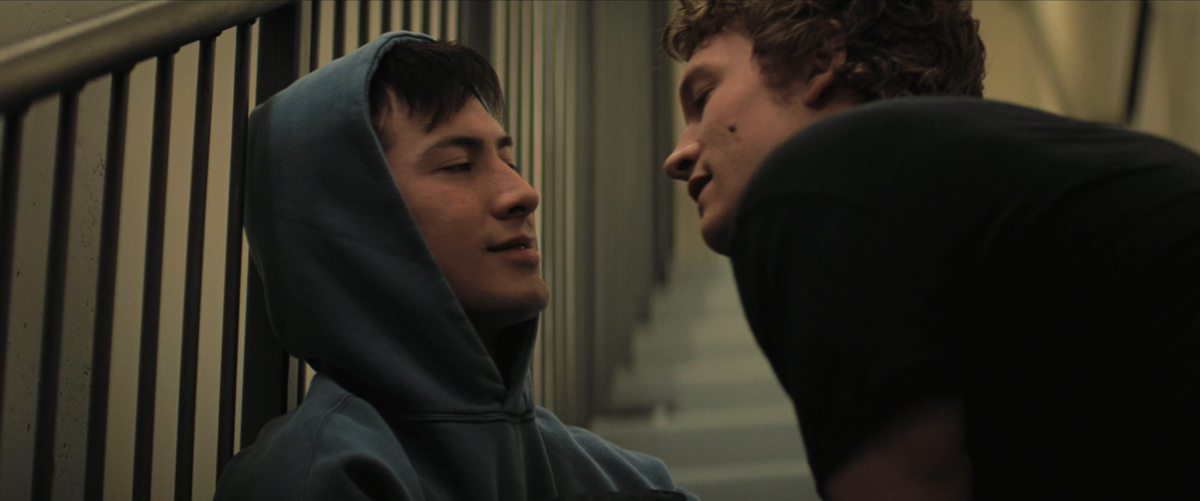
Still from Heated Rivalry Episode 2 in the stairwell
Yeah, that makes sense. The [instance] I'm thinking of is [one] Jacob [Tierney] mentioned. I think it's the kiss in the stairwell after [Shane and Ilya’s] first penetrative time in Episode 2.
Yeah. I asked a question about that, and he was like, “No, I love it,” and I was like, “Okay, great.” Often, I'm just curious, you know? I'm never like, “It should be this way,” because sometimes, just as [with] any story element, the actors are bringing their offers and the moment is happening and they might present an interpretation of that moment or that intimacy or those actions that, perhaps, didn't seem exactly as it was scripted, but it still works for the moment and nobody's boundaries are being crossed. So it's good to remain open for that as well, but I always like to ask the question in case.
I like that. As an editor, you can tell someone what you think they should do, or you can ask the question. I like to ask the question because the author is the person who knows the story better than me.
Yeah, exactly. I also like to ask the question because I'm one person in a collaborative effort towards telling a story.
I also did a ton of new-work development as an actor in the theatre where I found it to be my whole job to ask questions about the story—like if something wasn't clear to me, or even if I was like, “I have a different opinion about how this moment should go,” I would always frame it as a question because, as you say, people generally respond better to that because it gives space for dialogue, which is so crucial.
Yeah, I love telling the authors I work with, “Look, everything that I suggest or ask questions about is a suggestion, and I hope that whatever I say sparks something inside of you, even if it's “Oh no, I hate that. I want to go a different direction.”
One of the fundamental things that I learned [as an intimacy coordinator] is that a no is as positive as a yes. They're both just pieces of information that allow us to move forward in clarity. That's useful in conversations with actors around setting boundaries and consent levels because it's encouraging the idea that saying no is as positive as yes. I think also when I ask a question, and the director is like, “Oh no, I want it to be this way.” I'm like, “Okay, great. Now I have more clarity. Let's keep going.”
I just find it so awesome as a way to move forward in communication, especially in artistic creation.
You've also talked about specificity in your interviews and how that benefits the production and the story. Is there something [about] Shane and Ilya's relationship dynamic that a viewer would lose without having access to the intimate scenes?
That's tough because I feel like so much of Shane and Ilya's relationship actually gets developed through their sexual encounters, through their physical connections. It’s via navigating physical intimacy that's the primary way that they learn things about each other.
There are, of course, conversations that occur around that intimacy, but the navigating of coming together in a physically intimate, sexual way. That's how so much of their personhoods actually are revealed to each other. Then, the other more emotional, I guess, conversational intimacy arises out of that initial physical way of connecting, not because I don't think that they don't have an emotional or spiritual connection right off the bat, but the way that they engage with it is physical primarily to begin with. There are so many character details that are revealed in the way that they are together physically in their intimacy.
I guess that’s a bit overarching.
Honestly, it really is like when Jacob says that the sex in these stories propel plot and character forward, it does. Imagine taking out all of the intimacy from the series. Imagine watching Episode 1 and taking out every intimate scene. What would you even have?
I mean you can’t. There's no reason for them to be in the same place to learn anything about each other if they’re not having sex.
Yeah, through their sexual intimacy, we see how vulnerable they both are, which perhaps right off the bat, one might not assume that they have a similar level of vulnerability or even that either of them is that vulnerable. We get to see both characters’ vulnerability and how those are actually similar even though they come from different places through the physical intimacy.

Still from from a scene in Episode 4, colloquial called Tuna Melts
Everyone loves tuna melts—the scene—and that is one of the pivotal scenes emotionally. We stay so closely [with the characters] because there's so much in that scene that is about the vulnerability and how they both react to that scary moment.
Totally, and even earlier on, the first time they hook up in the hotel, it's revealed or not revealed to varying degrees that they’re both vulnerable, and we get to see that, again, to different degrees in different ways. That begins to tell us something about who these people are, who their families are, what their life experiences are, how they operate in the world, and how they feel in their bodies.
Jacob’s been asked about adapting [the book], and he’s said he thought it was unadaptable because of the sex. But I think about how we know so much from being in their heads. That's where you find the vulnerability in the book. How do you put that on screen? That was what [made me ask], “Will this be a good adaptation?”
That's interesting because I think a lot of that is translated through embodied behaviour. Whether it's in intimacy or in other moments, I think [we show, as people do in real life,] a lot of what you're describing—like the inner monologues, sensations, insecurities, thoughts or desires of the characters—whether we're aware of it or not, through our physical behaviour mostly and how we say things. But a lot of it is embodied.
You can see that in moments where, for example, [Ilya] might hesitate a little bit before saying, “Oh, it was my coach's son.”
Exactly. Or who reaches out to touch whom first and how, and when one person shrinks away or just shrinks, or when we see their body tense because of something or their breath change.
It's important to see all of those moments.
It's a whole inner emotional landscape being reflected through that behaviour.
I wish we saw more [explicit scenes] like this because it's so important.
I do too. I think it reveals a common ground for all people. When we get to see people in storytelling and feel this sense that everybody is vulnerable or desires love or to be seen, it creates empathy. I hope we can create empathy in the world.
I love your philosophy about how no is just another piece of information. I wonder: Do you see this attitude reverberating out from the show into general culture? I see people online talking a lot about Ilya checking in during the first time they have penetrative sex, but I also really enjoyed that when Shane says, “No, I don't want to do this with Scott Hunter next door,” Ilya says, “Okay.” And it’s fine.
Yes, totally, or even Scott and Kip [asking] “Can I do this?” Definitely, emphatic, enthusiastic consent.
I hope that element is resonating with people, and I know it’s sparking discussion. I certainly hope that all the positive elements of the show, including that one, are reverberating out into culture.
Do you have a favourite intimate scene from the show when it comes to what you were able to achieve either technically or narratively?
That's a great question. The first scene was so long, and there was so much scripted action in a specific order. It's hard, in an almost nine-minute scene, to be emotional, embodied and artistically free while still adhering to choreography and playing all the vulnerability of that moment since it's the first time that they meet in that way.
From my standpoint, it’s also a little vulnerable to give that much direction and to say “Actually, that was out of order. We really need to do it again. It's like this and this and this,” because I would hate to bring an actor out of their process, but it was important that it went down in a specific order. I have a good memory of that one because we all cared so much about it being exactly right, and we were willing to keep repeating it.
We rehearsed it, and I crouched next to them and I was like, “Okay, now this. Okay, now this. Okay, now this,” which was sweet and nice because they were really receptive to that. But also it meant that when I watch this scene, I'm like, “Yes, we got it!”
When the writing is so important and so specific, it elates me to truly honour that and bring it to life in such a fulsome way. I have so many friends who are novelists, playwrights and screenwriters, and when you feel that the series of words that have been chosen are so crucial and that's able to be embodied and brought to life in a way that feels truly emotionally and narratively thrilling and honest, that's the dream, you know?
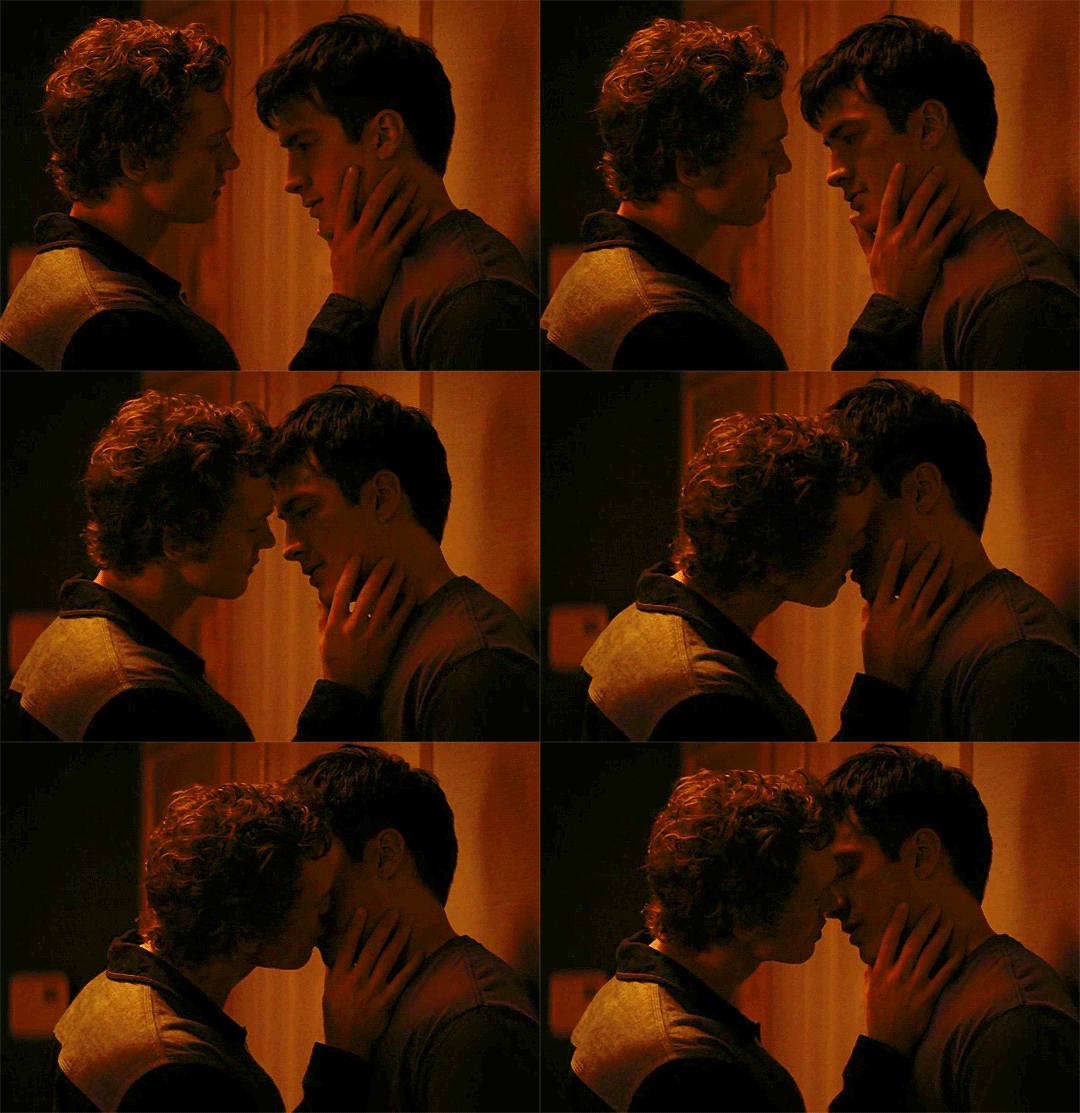
Gif from Chala’s favourite intimate scene (the first hookup in Episode 1)
I was at the Montreal premiere, and it was such an intense, emotional experience to watch that scene with people who were there because they really cared about the story. We could just feel that [you] took care with it.
I feel like fans who know the books, but also just people in general, watching the series, from the get-go are like, “Oh my gosh, I want these two to get together.”
The story is set up to get people to feel that way, so when they do and it's so fulfilling, so beautiful, so vulnerable, so long but so exacting, it's a huge catharsis or payoff for the audience. They get to feel the joy of that and the thrill of it as well.
It’s wild that it's only a few minutes into the first episode, and we still have felt the longing.
I know, I know. It’s like get ready. Right away, it’s like “Oh, this has to happen.”
The scene in the gym with the water bottle feels like so intense in that period piece way almost where you’re excited they’re touching hands.
I know. I feel like a lot of people have a moment like that from their life where they like someone they barely know and they connect with them for who knows why and the electricity of that is magic.
Next time you’re writing an intimate moment, remember that writing specificity into your characters’ actions is as important as telling your readers what they’re thinking because so much of what we communicate is through our embodied actions.
This magic is romance’s promise to the reader and what makes it so special. We all desire love—whether romantic or otherwise—and my conversation with Chala shows how much the people who made Heated Rivalry cared about getting that right.